
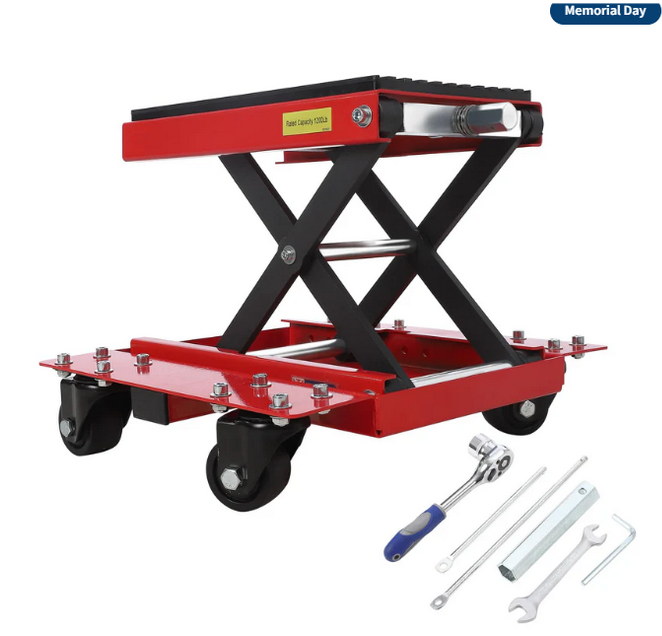
Maintaining a motorcycle at home becomes much easier when the workspace is safe, organized, and built around the right lifting solution. Whether you handle oil changes, chain cleaning, brake checks, tire inspections, or seasonal storage, having reliable garage lift equipment can save time and reduce strain on your back and knees. A good lift gives you better access to the underside of the bike, keeps the motorcycle stable, and helps you work with more confidence. Alongside other motorcycle maintenance tools, a lift can turn a basic corner of the garage into a practical bike repair setup. The key is choosing equipment that fits your motorcycle, your available space, and the type of maintenance you plan to do most often.
Why a Motorcycle Lift Matters in a Home Garage
Many riders start by working on the floor with a basic tool kit, but that approach quickly becomes uncomfortable. Tasks like inspecting the chain, removing wheels, checking suspension components, or cleaning hard-to-reach areas are much easier when the bike is elevated.
A motorcycle lift is not just about convenience. It also supports better accuracy. When the bike is steady and raised to a comfortable height, it becomes easier to spot leaks, worn bolts, loose parts, and alignment issues. This is why lift systems are often considered essential motorcycle maintenance tools for riders who prefer doing routine service themselves.
A good lift also helps protect the motorcycle. Instead of leaning the bike awkwardly on a side stand or balancing it with improvised supports, proper lifting equipment provides a stable platform designed for the job.
Building a Practical Bike Repair Setup
A reliable bike repair setup does not need to look like a professional workshop. It only needs to be safe, efficient, and arranged so that every tool has a purpose. The lift should be the center of the workspace because many repair tasks happen around it.
Before choosing a lift, think about:
-
The weight and size of your motorcycle
-
The type of maintenance you perform most often
-
The amount of floor space in your garage
-
Whether you need portability or a fixed work area
-
How easy the lift is to store when not in use
For smaller garages, compact lift jacks can be more practical than large platforms. For riders who service multiple motorcycles, a stronger and more versatile lift may be worth considering. The goal is to create a setup that makes routine maintenance feel simple rather than stressful.
Key Types of Motorcycle Lift Equipment
Different riders need different lifting solutions. Understanding the basic options can help you choose equipment that matches your maintenance habits.
Scissor Lifts
Scissor lifts are compact and commonly used for smaller motorcycles, cruisers, and dirt bikes. They usually fit under the frame and raise the bike vertically. Their main advantage is simple storage, making them useful for riders with limited garage space.
Hydraulic Lift Jacks
Hydraulic lifts are popular because they reduce manual effort. With hydraulic pressure, you can raise the motorcycle smoothly and keep it at a comfortable working height. For riders comparing options, a Motorcycle Lift Jack can be a practical piece of garage lift equipment for routine service, cleaning, and inspection tasks.
Lift Tables
Lift tables provide a larger platform and are often used by serious home mechanics or small repair shops. They make it easy to walk around the motorcycle while working. However, they require more space and may not be suitable for every home garage.
Paddock Stands
Paddock stands are useful for sport bikes and lighter maintenance jobs such as chain lubrication, rear wheel cleaning, and tire checks. They are not a replacement for a full lift, but they are valuable motorcycle maintenance tools when used correctly.
Safety Features to Look For
Safety should always come before convenience. A lift is holding hundreds of pounds of machine weight, so stability matters. Before buying or using one, check the rated weight capacity and make sure it exceeds your motorcycle’s weight.
Useful safety features include:
-
Wide base for better balance
-
Locking positions or safety bars
-
Non-slip rubber pads
-
Tie-down points
-
Smooth lifting and lowering control
-
Strong steel construction
Never rely only on hydraulic pressure while working under or around the motorcycle. Use safety locks when available, and make sure the bike is centered before lifting. Also, avoid lifting on uneven surfaces because even a small tilt can affect stability.
Matching the Lift to Your Motorcycle
Not every lift works with every motorcycle. Cruisers, touring bikes, sport bikes, dirt bikes, and scooters all have different frame designs and ground clearances. A lift that works perfectly for one model may not fit another without adapters.
For cruisers and touring motorcycles, weight capacity is especially important. These bikes can be heavy, and extra accessories such as saddlebags, crash bars, and larger fuel tanks add more load. Sport bikes may need paddock stands or specific lifting points, while dirt bikes often work well with compact center lifts.
Before adding lift equipment to your bike repair setup, check the motorcycle’s frame structure and the lift’s contact points. The lift should support the bike securely without pressing against fragile parts such as exhaust pipes, plastic fairings, or engine covers.
Essential Tools to Use Alongside a Lift
A lift becomes more useful when paired with a well-planned tool collection. You do not need every tool at once, but a few essentials can make regular maintenance easier and cleaner.
Important motorcycle maintenance tools include:
-
Socket and wrench set
-
Torque wrench
-
Screwdrivers and Allen keys
-
Chain brush and lubricant
-
Oil drain pan
-
Tire pressure gauge
-
Work light
-
Tie-down straps
-
Magnetic tray for bolts
-
Cleaning cloths and degreaser
A torque wrench is especially important because motorcycles often require precise tightening. Over-tightened bolts can damage threads, while loose bolts can create safety risks. Keeping these tools near your lift saves time and helps you stay organized during each job.
Organizing Your Garage for Better Workflow
Good organization can make a small garage feel much more capable. Place the lift where you have enough room to move around the motorcycle. You should be able to access both sides of the bike without stepping over tools or extension cords.
Wall-mounted shelves, pegboards, and rolling tool carts can keep the workspace clean. Store fluids such as oil, brake cleaner, and chain lubricant away from heat sources. Keep frequently used items within reach, and label containers if you store multiple types of parts or fasteners.
Lighting is another major part of an efficient bike repair setup. A bright overhead light helps, but a portable work light is useful when checking under the engine, around the brakes, or near the suspension.
Common Maintenance Jobs Made Easier by a Lift
Once your motorcycle is raised and stable, many routine jobs become more comfortable. A lift can help with:
-
Oil and filter changes
-
Chain cleaning and lubrication
-
Brake pad inspection
-
Tire and wheel checks
-
Exhaust inspection
-
Undercarriage cleaning
-
Bolt tightening
-
Suspension inspection
-
Winter storage preparation
Using a Motorcycle Lift Jack can also make detailing easier because you can clean low areas without constantly bending. For riders who maintain their bikes regularly, this can make the process faster and more enjoyable.
Maintenance Habits That Extend Equipment Life
Your lift also needs care. Wipe it down after use, especially if it comes into contact with oil, dirt, or road grime. Check moving parts for wear, and inspect hydraulic components for leaks. If the lift has wheels, make sure they roll smoothly and lock properly when needed.
Store the lift in a dry area to reduce rust. If your garage is humid, consider using a mat or platform under the equipment. Small habits like these help your garage lift equipment last longer and perform safely over time.
FAQ
What is the best lift for basic motorcycle maintenance?
For most home garages, a hydraulic lift jack or compact scissor lift is enough for basic maintenance. The best choice depends on your motorcycle’s weight, frame design, and available garage space.
Do I still need other motorcycle maintenance tools if I own a lift?
Yes. A lift improves access and stability, but you still need tools like wrenches, sockets, a torque wrench, tire gauge, chain brush, and oil drain pan to complete most maintenance tasks.
Can a beginner create a safe bike repair setup at home?
Yes, beginners can build a safe bike repair setup by starting with essential tools, choosing a lift with proper weight capacity, keeping the workspace clean, and following the motorcycle owner’s manual.
How much space do I need for garage lift equipment?
You need enough room to position the motorcycle, operate the lift, and walk around both sides safely. Compact lifts work well in smaller garages, while lift tables need more dedicated space.
Conclusion
The right lifting equipment can make motorcycle maintenance safer, cleaner, and far more comfortable. Instead of struggling on the floor or relying on unstable supports, riders can use proper garage lift equipment to create a dependable workspace for routine service. When combined with essential motorcycle maintenance tools, good lighting, organized storage, and safe lifting habits, a lift becomes the foundation of a smarter home garage. A thoughtful bike repair setup does not need to be complicated; it simply needs to match your motorcycle, your space, and your maintenance routine. With the right equipment in place, caring for your bike becomes easier, more efficient, and more enjoyable throughout the riding season.